The short answer
No, you do not need a battery to install solar panels. A solar PV system can generate electricity for your home during daylight hours, with any unused electricity exported to the grid. However, a battery can store some of that surplus energy so you can use it later – when your panels are producing less or nothing at all.
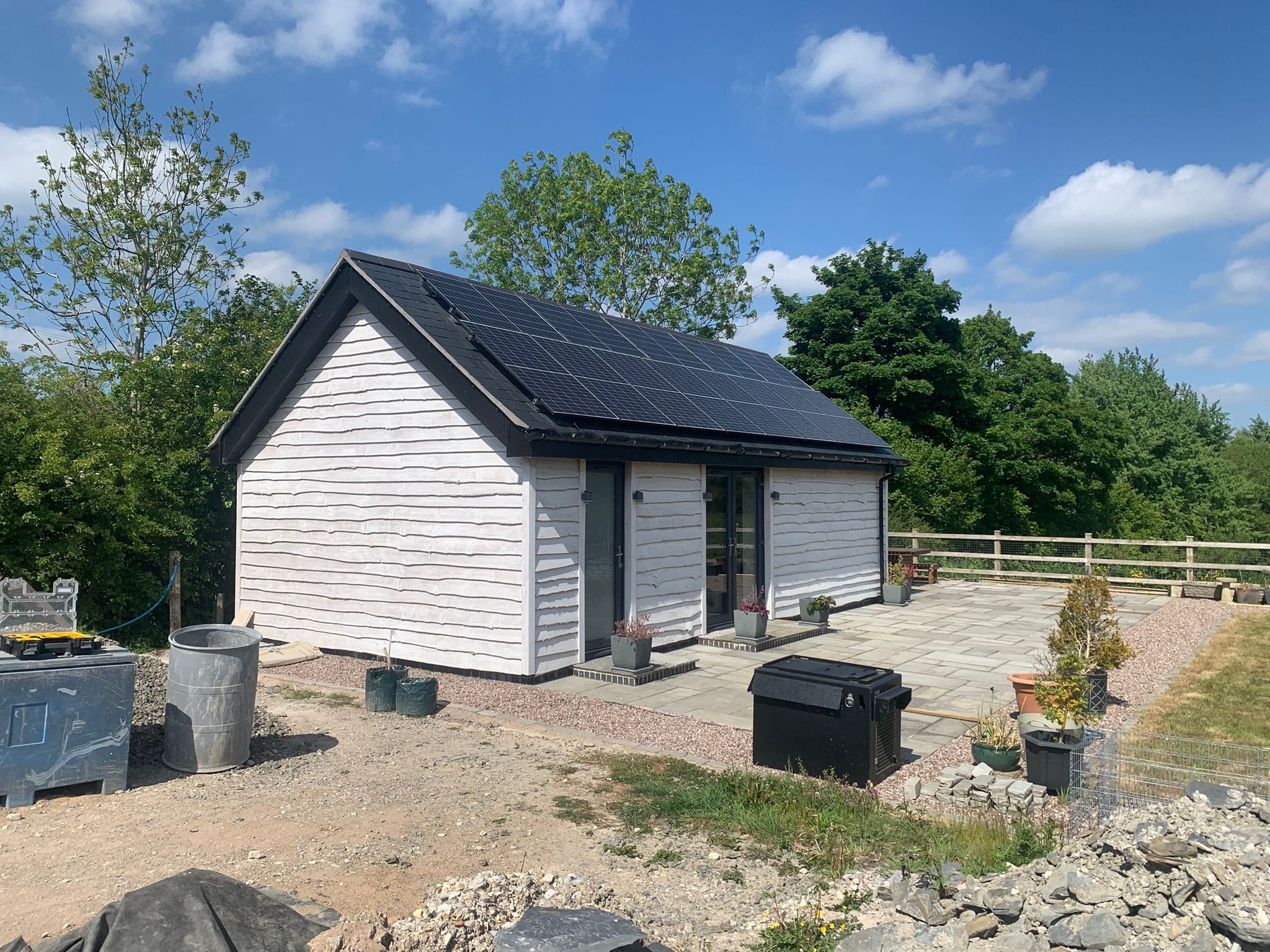
Whether battery storage is worthwhile depends on several factors: how much electricity your home uses during the day, how much you use in the evening, your available roof space, your budget, and how you’re paid for exported electricity.
The real question isn’t “solar panels versus solar panels with a battery.” It’s about matching the system to how your household actually uses electricity. For some homes in North Wales and Cheshire, panels alone make perfect sense. For others, a battery unlocks significantly more value from the same solar installation.
How Do Solar Panels Work Without a Battery?
Understanding how solar panels function on their own helps clarify what a battery actually adds. Here’s the basic energy flow:
- Your panels generate electricity during daylight hours – output varies with weather and season, peaking around midday on sunny days.
- Your home uses available solar electricity first – any appliance running while the panels are generating draws from your free solar power.
- Surplus electricity exports to the grid – when your panels produce more than you’re using, the excess flows out to the national grid.
- When solar output is low, you import from the grid – in the evening, at night, or on overcast days, you buy electricity as normal.
- You may receive payment for exports – the Smart Export Guarantee (SEG) requires licensed electricity suppliers to offer a tariff for exported electricity. Rates vary between suppliers.
SEG payments are for electricity exported to the grid, not for every unit your panels generate. The electricity you use directly in your home doesn’t earn SEG payments – but it does reduce the amount you need to buy from the grid.
Energy flow without a battery
During daylight:
Solar panels → Your home appliances → Surplus exported to grid
Evening/night:
Imported from grid → Your home appliances
Solar panels work perfectly well without storage. Millions of UK homes have solar PV systems without batteries and benefit from lower electricity bills and export income.
What Does a Solar Battery Do?
A solar battery changes when you use your solar electricity. It doesn’t increase how much electricity your panels generate.
What a battery does
Stores surplus electricity generated during the day – instead of exporting immediately, excess solar charges the battery first.
Makes stored electricity available later – you can use your own solar power in the evening or overnight.
Can increase self-consumption – the proportion of your solar generation that you actually use in your home.
May charge from the grid – some systems we install from Tesla, Solis, Sigenergy & Fox can charge from cheap overnight electricity on time-of-use tariffs, then discharge during expensive peak periods.
What a battery doesn’t do
It doesn’t make your panels generate more electricity
It doesn’t guarantee power during a blackout (more on this below)
It doesn’t store unlimited energy – batteries have a finite capacity
Energy flow with a battery
During daylight:
Solar panels → Your home appliances → Battery charges → Extra surplus to grid
Evening/night:
Battery → Your home appliances → Grid (if battery depleted)
On a very sunny summer day, your panels might generate far more than your battery can store. Once the battery is full, surplus electricity exports to the grid as normal.
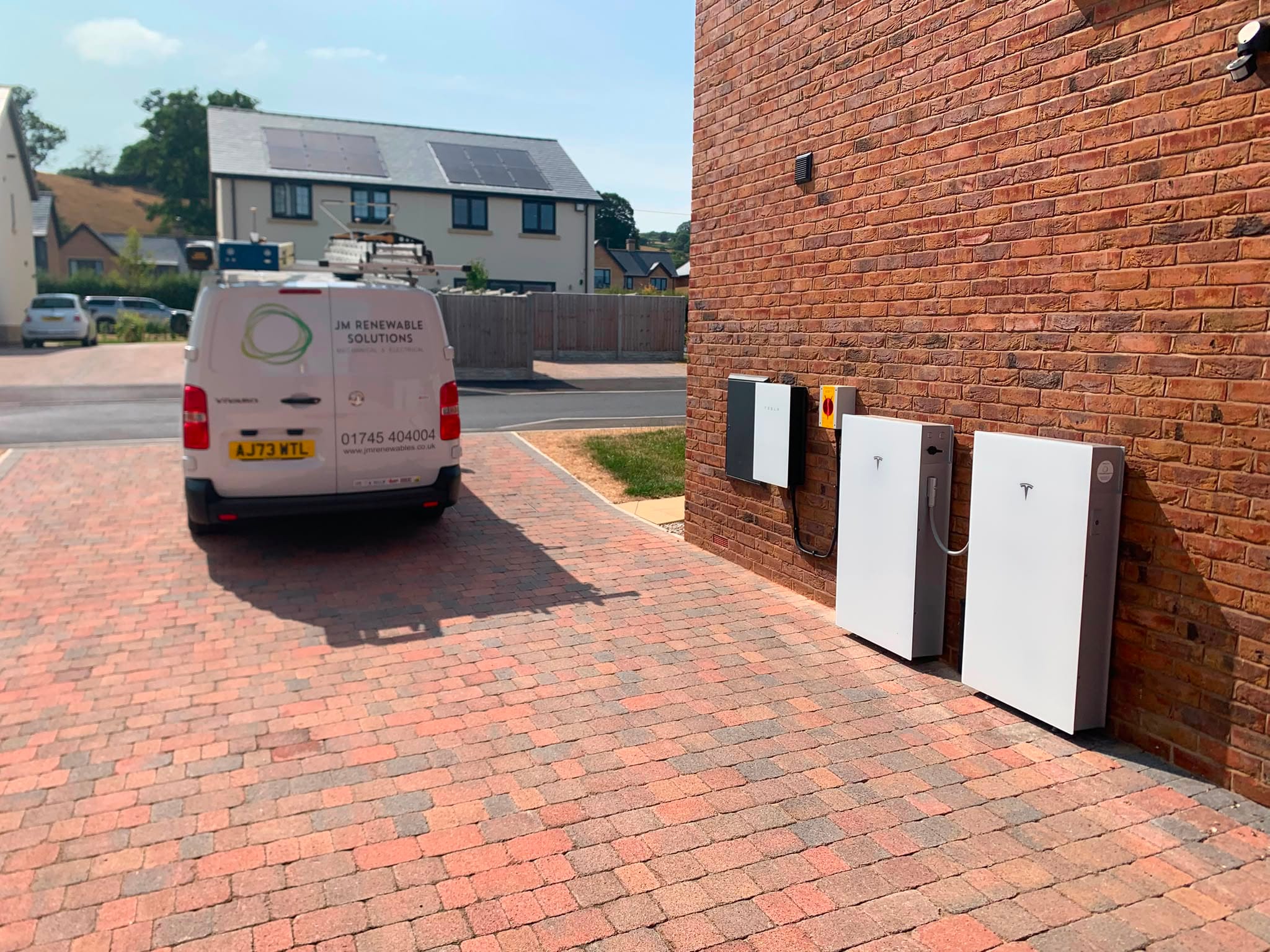
Solar Panels With and Without a Battery: What’s the Difference?
| Feature | Without a battery | With a battery |
|---|---|---|
| Daytime solar use | Used directly by appliances running at the time | Used directly first, surplus charges the battery |
| Evening electricity | Usually imported from the grid | Can partly come from stored energy |
| Surplus solar | Exported immediately | Stored first, then exported if battery is full |
| Upfront cost | Lower | Higher |
| System complexity | Simpler | More components and controls |
| SEG income | More surplus may be exported | Less may be exported (because more is stored) |
| Potential self-consumption | Lower, depending on household patterns | Higher, depending on battery size and usage |
| Backup during a power cut | Not normally available | Only if the system includes specific backup functionality |
A battery does not automatically keep your lights on during a blackout. Standard grid-connected battery systems shut down when the grid fails, for safety reasons. Backup capability requires specific equipment and installation – don’t assume it’s included.
When Might Solar Panels Alone Be the Better Option?
Adding a battery isn’t always the right choice. Solar panels without storage may suit you if:
You use a lot of electricity during the day – if you work from home, have family members at home during daylight hours, or run appliances while the sun is shining, you’re already using your solar electricity directly.
You have moderate evening electricity demand – a household that goes to bed early or doesn’t run many appliances in the evening may not benefit much from stored energy.
You want the lowest upfront cost – batteries add several thousand pounds to an installation. If budget is tight, starting with panels alone makes sense.
You prefer to export surplus electricity – some homeowners are happy receiving SEG payments rather than storing energy for later use.
You plan to add a battery later – installing panels first lets you understand your actual generation and usage patterns before deciding on battery size. Many systems can accommodate a battery later.
You can shift flexible loads to daylight hours – running your washing machine, dishwasher, immersion heater or EV charger during peak solar generation uses electricity directly – no storage needed.
The key point: if your household can use a large proportion of its solar electricity as it’s generated, a battery may provide less additional value than it would for a home that’s empty all day.
When Could a Battery Be Worthwhile?
A battery may be worth considering if your household:
Uses most electricity in the evening or overnight – if you’re out at work during the day and come home to cook, watch television and run appliances in the evening, much of your solar generation would otherwise be exported.
Is often away during peak daylight hours – empty homes can’t use solar electricity directly, so it flows straight to the grid.
Wants to maximise self-consumption – some homeowners prefer using their own generated electricity rather than exporting and importing.
Has an electric vehicle or heat pump – higher electricity demand means more potential value from stored solar, though EV owners should also consider direct daytime charging. See our air source heat pump installations.
Has a time-of-use tariff – systems from Tesla, Solis, Sigenergy & Fox can charge from cheap overnight grid electricity and discharge during expensive peak periods, adding value beyond solar storage alone.
Wants backup power capability – if keeping essential circuits running during a power cut matters to you, this can be designed into the system – but it must be specified and installed correctly.
Has existing solar panels exporting substantial surplus – if you already have solar and your monitoring shows significant daily exports, adding a battery could capture that value.
These are indicators, not guarantees. A proper assessment should consider your actual solar generation, household demand patterns, battery size options, electricity tariffs, system efficiency, warranty terms and installation cost.
Will a Battery Save Me More Money?
This is the question everyone asks, and the honest answer is: it depends. A battery can reduce grid imports by letting you use stored electricity when you’d otherwise be buying from the grid. The financial outcome depends on:
| Factor | Why it matters |
|---|---|
| Battery and installation cost | Typically £4,000–£10,000+ depending on capacity and brand |
| Surplus solar you’d otherwise export | More surplus means more potential to store |
| Value of exported electricity | Current SEG rates vary; check your supplier |
| Price of imported electricity avoided | Higher electricity prices increase the value of stored solar |
| Usable capacity | Not all stated capacity is usable |
| Battery efficiency | Some energy is lost in charging and discharging |
| Degradation over time | Capacity gradually reduces over the warranty period |
| Time-of-use tariff | Grid charging and peak discharge can improve economics |
| Evening consumption | More evening use means more opportunity to use stored energy |
| Warranty and lifespan | Most quality batteries offer 10-year warranties |
An Illustrative Example
Imagine a home that generates significant surplus solar electricity around midday but uses most of its electricity after 6pm. Without a battery, much of the midday surplus is exported – perhaps earning 10–15p per unit through SEG.
Exported through SEG
10–15p
per unit earned
Imported electricity avoided
25–30p
per unit saved
With a suitably sized battery, some of that energy could be stored for evening use, avoiding the need to buy electricity at 25–30p per unit. The potential benefit is the difference between what you’d have earned exporting and what you save by not importing later.
This calculation varies enormously between households, which is why we don’t quote generic payback periods.
Does a Battery Affect Smart Export Guarantee Payments?
Yes, but not necessarily in the way you might expect. SEG payments relate to electricity exported to the grid. If your battery stores surplus solar instead of exporting it immediately, fewer units are exported at that moment, so your SEG income may reduce.
However, the electricity you store might be worth more used at home than exported. If your SEG rate is 12p per unit but your import rate is 28p per unit, using stored electricity saves you more than exporting it would earn. The decision isn’t simply “export everything” versus “store everything.” It involves comparing:
- The value of export payments (SEG rate × exported units)
- The value of using stored electricity (import rate × units you’d otherwise buy)
Some battery systems can also export stored electricity to the grid, subject to your tariff terms and system configuration. This can be useful with certain time-of-use arrangements.
How Big a Battery Do I Need?
There’s no standard answer based on the number of bedrooms or solar panels. Battery sizing should consider:
| Solar PV system size | a larger array can charge a larger battery |
| Expected daily generation | varies significantly by season |
| Household electricity consumption | how much you use in total |
| Evening and overnight demand | when you need stored energy |
| Heat pump or EV ownership | increases electricity demand |
| Available space | batteries need wall or floor space |
| Budget | larger batteries cost more |
| Planned grid charging | time-of-use strategies may need larger capacity |
| Backup requirements | longer backup duration needs more capacity |
| Household pattern | Possible design focus |
|---|---|
| Home occupied during the day | Prioritise direct solar use; battery may be smaller |
| Home empty until evening | Battery helps shift daytime generation to evening |
| Heat pump in the home | Assess seasonal demand and winter solar output carefully |
| EV owner | Compare battery storage with direct daytime EV charging |
| Backup priority | Specify essential circuits and expected outage duration |
Don’t automatically choose the largest battery available. An oversized battery may not charge regularly enough, especially in winter, to justify its additional cost. An undersized battery may leave substantial surplus electricity unused. The right size matches your actual patterns.
Can I Add a Battery to Existing Solar Panels?
Often yes, but compatibility must be checked. Key considerations include:
| Existing inverter type | determines whether an AC-coupled or DC-coupled battery is appropriate |
| System age and condition | older systems may need additional work |
| Available space | for the battery unit and any additional equipment |
| Electrical requirements | your consumer unit may need upgrading |
| Monitoring and export meter arrangements | may need reconfiguring |
| Backup functionality | requires specific design if wanted |
| Certification and documentation | your existing installation should have proper paperwork |
Not every solar system can accept every battery. JM Renewables installs systems from Tesla, Solis, Sigenergy & Fox and can assess whether it’s compatible with your existing setup.
Will a Solar Battery Work During a Power Cut?
Not necessarily. This is one of the most common misconceptions about home batteries. Standard grid-connected solar and battery systems usually shut down during a power cut, for safety reasons – to prevent your system feeding electricity into the grid while engineers are working on the lines.
If backup power matters to you:
- Backup capability requires specific equipment, wiring and controls
- It must be designed into the system from the start (or retrofitted properly)
- Backup systems typically power selected essential circuits, not the whole home
- How long backup lasts depends on battery charge level and what you’re running
- Tesla Powerwall can provide backup functionality when correctly installed
Discuss backup explicitly during the design process, and get the arrangements confirmed in writing – including which circuits will be powered and for how long.
Don’t assume “battery storage” automatically means “power during blackouts.”
Solar Battery Myths to Avoid
Myth
You must have a battery with solar panels
Reality
Solar panels work perfectly well without a battery. Surplus electricity can be exported to the grid, and you may receive SEG payments.
Myth
A battery creates more solar energy
Reality
A battery stores electricity generated by your panels (or imported from the grid). It doesn’t increase how much your panels generate.
Myth
Any battery keeps the home running in a power cut
Reality
Backup requires compatible equipment, specific wiring and controls. Standard installations shut down when the grid fails.
Myth
The biggest battery is always best
Reality
Battery size should reflect your solar generation, household demand, electricity tariffs and budget. Oversizing can mean paying for capacity you never use.
So, Should You Get a Battery with Your Solar Panels?
A battery may be worth considering if:
You use most electricity after sunset
Your solar system regularly produces surplus electricity
You want to increase self-consumption
Your household has a heat pump or EV
You’re considering a time-of-use tariff
You specifically want designed backup capability
Panels without a battery may suit you if:
You use electricity during the day
You want to minimise upfront cost
You can shift flexible appliances into daylight hours
You’re comfortable exporting surplus electricity
You want to monitor your usage before deciding on storage later
The Right Choice for Your Home
You don’t need a battery to benefit from solar panels. For some homes, using solar electricity during the day and exporting surplus energy is the simplest and most cost-effective approach. For others, particularly homes with high evening use, a battery can make more of your generated electricity available when you need it.
The right choice depends on your roof, your solar system size, your electricity usage patterns and your future plans. JM Renewables can assess these factors and explain whether solar panels alone, solar panels with a battery, or a system designed for future battery storage is the most suitable option for your home in North Wales or Cheshire.
Ask JM Renewables to assess the right solar and battery setup for your homeFrequently Asked Questions
Can I install solar panels now and add a battery later?
Often yes, but compatibility with your existing inverter and system design needs to be checked. Some inverters work better with certain battery types, and electrical upgrades may be needed. It’s worth discussing future battery plans during your initial solar installation so the system can be designed with this in mind.
Do batteries work in winter?
Yes, batteries work year-round. However, the amount of solar available to charge the battery is generally lower in winter due to shorter days and less intense sunlight. A battery cannot store electricity that the panels haven’t generated. Some households use time-of-use tariffs to charge batteries from cheap overnight grid electricity during winter months.
Do solar panels work without electricity from the grid?
Most standard systems remain connected to the grid. During a power cut, they usually shut down unless a suitable backup system has been installed. This is a safety requirement, not a system fault.
Is it better to use solar electricity or export it?
Using solar electricity at home avoids buying from the grid at full price. Exporting earns SEG payments, which are typically lower than import prices. For most households, using solar directly provides better value – but exporting surplus you can’t use is still worthwhile.
Can a battery charge from the grid?
Some systems can, depending on the battery, inverter, controls and your electricity tariff. Tesla Powerwall, for example, can charge from the grid on time-of-use tariffs, storing cheap overnight electricity and discharging during expensive peak periods. This should be confirmed during the design process.
Does a battery increase the value of my home?
Energy improvements may be attractive to some buyers, and a well-installed solar and battery system could be a selling point. However, any effect on property value is difficult to guarantee and depends on buyer preferences, system condition and remaining warranty. This shouldn’t be the sole reason for installing a battery.

